Saturday, 22 February 2014

Focus


Over the holidays, one of the books that I read was Focus by Daniel Goleman. I was looking forward to this because his book Emotional Intelligence was excellent.   I was also interested in Focus because of the classroom implications. 
Edutopia has a nice article and a video playlist of the key ideas from the book. This video, on Breathing Buddies really got me thinking about how I might be able to utilize this with my students.


I started sewing up these Breathing Buddies for students to use, and then I realized that it would be SO much better if students sewed their own. Afterall, sewing a button is a good skill for everyone to have----- plus students would probably be more engaged when creating their own buddies.

We started by learning how to thread a needle and sew ------ up and down, up and down ------ on a paper plate. 


Students then drew a circle, rectangle and triangle pattern on a paper plate and sewed around the perimeter of each shape (a math connection). Next, students chose their felt colour(s) and the buttons that would make the cutest, strangest or scariest face depending on student preference. After making choices, it was time to sew on the button eyes. Threading the needle and sewing on the paper plate had been great practice for students.

There was some frustration - and that was ok! We were discussing strategies that we could use when we get frustrated. We talked about how anger, sadness, frustration, fear and joy were all normal emotions. We also had discussions about how we don't always make the best decisions when we are angry or frustrated, so we all have to have strategies to help us calm down.

Here are some of the Breathing Buddies or Calming Creatures as some students named them. The idea is to put the buddy on your belly and take a slow breath that is big enough to inflate your belly like a balloon so the buddy rises up - then you slowly breathe out so the buddy doesn't fall off your belly. After your buddy rises and falls 5-10 times, we all decided that we felt more calm and relaxed.


apologies about the misalignment of the pictures....something is not working correctly :(

Reader's Theater Part 1


To introduce grade 2 students to Reader's Theater, we started with a Read Aloud of The True Story of the Three Little Pigs by Jon Scieska and watched an example of how this book was performed as Reader's Theater.

After seeing the first Reader's Theatre example, we co-constructed success criteria. Despite my insistence that Reader's Theatre does not require masks, my students argued that without masks it would be very difficult for the audience to know which character was which. So we included masks. Here is the first iteration of our co-created success criteria. 

 
We then watched a second Reader's Theater version of The True Story of the Three Little Pigs & used our success criteria to evaluate it. Students were not impressed with the performance, but thought about new items to add to our Success Criteria List.


Next came our discussion about scripts. Everyone wanted to play the role of the Wolf, so we decided that we would do several different Reader's Theater plays, ensuring that everyone who wanted to play a wolf could do so. (They did not realize how happy I was to agree to this - more Reader's Theater = more excitement about reading, more willingness to practice at home, more discussion and more opportunity for students to see the pattern of stereotypical 'wolfness' in fairy tales.)
 
Knowing how important the masks were for my students, I did some searching and found this instructional video for creating a wolf mask.


Each student (even the reluctant writers) jotted down a materials list while watching the video and every student gave me specific feedback on how I could improve the sample mask that I made.

Here are a few pictures of our mask making in progress (you will also see some bird masks which are for the script is The Wolf and The Seven Birds).


Did you notice that the wolf in the middle is eating a bird? !!!!


Now that our masks are almost complete, students are rehearsing on their own and with their groups. Students playing the same part, but in a different group, have become Guided Reading groups (all Mother Birds in one group, etc.)
 
The student's Drama teacher was impressed with the masks and we've started discussing how we can work together to allow the students to move beyond Reader's Theatre by adding movement, props, etc.
 
I will post Part 2 when we have had some run-throughs. Hopefully I will get permission to post some video :)
 
***apologies for the picture formatting - something is not working correctly :(

Sunday, 12 January 2014

Everybody Can Improve

I watched this Dylan William video this morning called "Every Teacher Can Improve" and I sent out a Tweet with a link.


I thought that the video was awesome because 1) it made me feel like my struggles as a teacher were normal 2) it acknowledges that teaching is difficult but rewarding, and 3) it reminded me of Carol Dweck's work on Mindset. 

Within a few minutes I had two Direct Messages that didn't agree with my #awesome.

"Teachers shouldn't bash teachers, we get enough from the public" was one comment. Another one said "FYI, your Tweet seemed 'preachy'"

I appreciate the feedback because it helps me reflect and gives me the opportunity to explain myself.

I didn't mean it as a 'bash' or to be 'preachy', I shared it so that others might enjoy the same feelings that I did. For me it was confirmation that I don't have to know everything, that I don't have to be perfect. While I know these things logically, there are times when I can use a reminder :)

I know that I can improve as a teacher, a parent, a spouse, a friend, etc., etc.

I find joy improving in things that are important to me.

Everybody can improve in some aspect of their lives, whether it is personally or professionally.


Saturday, 4 January 2014

Wheels of Fiction

When teaching the Elements of Fiction, I've usually started by discussing familiar stories with students and then randomly placing a jot note in a chart something like this (for Cinderella).

                   SETTING        
CHARACTER
PROBLEM
SOLUTION
When
Where
Who
What
Why
How
Sometime
Somewhere
Somebody
Wanted
But
So
Then
Long Ago


Her fairy godmother came


To go to the ball


In a faraway kingdom


She went to the ball, met the prince, got married and lived happily ever after


Her evil stepmother would not let her


Cinderella


A simple plot summary for Cinderella (using the SSSWBST formula) would be:

Long ago, in a faraway kingdom, Cinderella wanted to go to the ball BUT her evil stepmother wouldn't let her. SO, her fairy godmother appeared and helped her. THEN she went to the ball, met and married the prince, and lived happily ever after.

We would then complete the chart with elements from other shared stories, use a die to randomly select 1 item for each category and then write a new 'fractured' story summary. This would be followed-up with either a modeled or shared writing session.

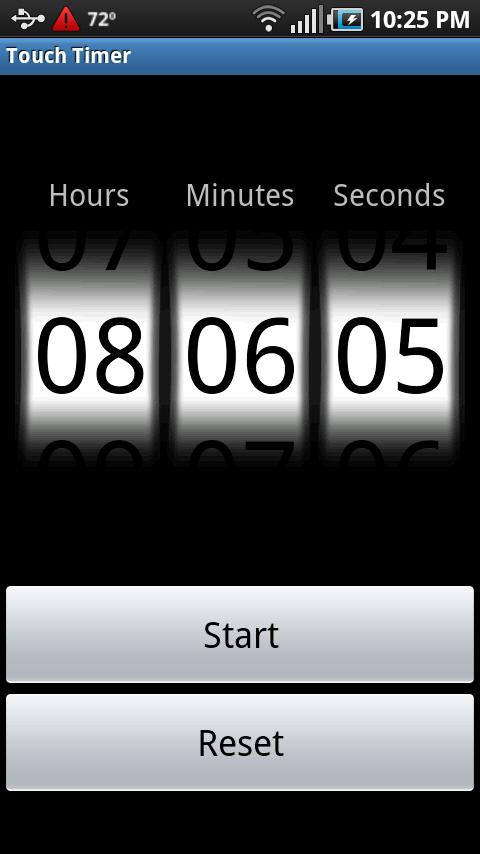
I wanted to move away from the chart and die format and make something that we could spin. For a minute I thought about asking my husband to help me make me a big and real wheel - like the one on Wheel of Fortune, but, as much fun as that would be, where would I keep it? Then, I was using a timer app and I thought that something like this could be modified to fit my needs.


But I don't have a clue about how to develop my own app....yet, but I want to learn.

I couldn't find an online tool that was exactly what I wanted, so I spent some time on PowerPoint creating Wheels of Fiction. Maybe I'm impressed due to the "IKEA Effect", but I made something that actually SPINS! (and I think my grade 2's will like the spinning action and sound effects).

I'll use this with my grade 2's, but if I was still teaching middle school I would have students create their own spinners (while I was creating this, I realized how much math (probability, circumference, degrees in a circle, etc.), ethics/character ed (what might look random is NOT), and language was involved.

In any grade, this will help students articulate a clear and simple plot summary, generate story ideas (for those who need some help), and set the scene for writing collaboratively or independently.

PS - Best viewed as a PowerPoint slide show. The SPIN animation doesn't work on an iPad when you use SlideShark . Spin works in Office365 PowerPoint Web App, although there is still no sound.

I've filled in all of the slides so that you can get the idea of how it works, but the beauty in this PPT is that you can customize it to suit your needs. I would love to hear how you might use the Wheels of Fiction :)

Friday, 20 December 2013

Map Mystery

Social Studies, Visual Arts & Language – Mystery Map Activity in Grade 2

Our class has explored the local school community through neighbourhood walks, with Google Earth and with printed maps. Since many of my students enjoy hands-on experiences & needed some extra practice with understanding and using cardinal directions, we built our own neighbourhood using the Create a Town printables.


I printed the map in colour and assembled it at home and then the students put their designer touches on each building by colouring and constructing their own structure for the community. We looked at local buildings made of bricks, concrete or siding as well as roofing materials and how we could use line, shape, colour and texture to make them look realistic. Some students added chimneys to their homes as well.


Once all of the buildings were in place on the map, I asked students to compare it to the community around the school and to think about what was missing.  Students decided that we needed a Fire Station, a hockey rink, swimming pool, and high school. The class was divided into 4 groups and each group had to come up with the best place for 1 of the missing buildings and then explain to the rest of us why this was the best spot.

Next up was the Map Mystery which would give students the opportunity to practice using cardinal directions, listening, speaking and writing. I told a story about buried pirate treasure, then read my Map Mystery instructions (students could follow along on their own copy as well).  The instructions used co-ordinates and cardinal directions to provide directions from one place to another. Some students were able to visualize the steps, while others moved an eraser around to represent a person walking in our 3D community. When students arrived at the mystery destination, they lifted up the building to find a red cardboard X.

We co-created success criteria for a Map Mystery story and directions. Students assessed my story and directions and provided me with feedback on how I could have made my story more interesting and my directions more clearly.

Then it was their turn to create a Map Mystery and story. Many students wanted to make it difficult for their partner to solve but they didn’t realize that the more difficult the mystery, the more writing and practicing they would be doing, which was ok by me. Some students used an X and worked with a partner and/or sentence frames, while others worked individually to create a different paper prop to hide under the secret building for a unique mystery story (such as a lost dog, stolen money or a location giving away free video games). Students wrote directions themselves and others dictated their directions to me while I scribed for them. Finally, they read their story and directions to a peer who had to solve the mystery and find the item. If they didn’t find the correct building & solve the mystery, the pair of students worked together to fix up the directions OR discussed where they might have taken a wrong turn.

Our local community looks a lot like the Create a Town community. Next, we will be looking at different houses around the world and comparing them to ours. One resource that we will use is Wonderful Houses Around the World by Yoshio Komatsu. 

FYI, the new Social Studies curriculum document has a nice blurb about spatial literacy on page 24 and a Continuum of Map, Globe and Graphing Skills in Appendix C beginning on page 191.


I would definitely do the Map Mystery again. There were many opportunities to integrate technology, so I’m hoping it will be even better next year when we have school iPads.

Sunday, 15 December 2013

The Things Kids Say

Here are a few things that my students said this week that made me smile or made me laugh.


"This might be the best book I ever read. Can I read you my favourite part?"


Me: "What does this mean?"
Student: "It means that the elves make everything."


"Can we stay in for recess and work on our Map Mystery?"


"Mrs. Axiak, just keep trying until you catch some rhythm."

"Your face is so funny when you try to dance."


Despite my funny face, I'm going to keep on trying to catch some rhythm :)

Saturday, 14 December 2013

The 6 Cs Project - Communication

The 6 C's of 21st Century Teaching & Learning - Week 3 - Communication

This week Tina Zita, Matthew Oldridge, Jason Richea, Magdalena Front and I shared our thoughts and each came up with a 6-word definition for Communication.


Matthew Oldridge says: Communication: making your voice heard

Jason Richea says: Communication: Capturing the Attention of the Masses

Tina Zita says: Communication: Clear message, deep toolbox, understanding audience

Magdalena Front says: Conveying relevant messages that inspire others

Debbie Axiak says: Giving and/or receiving information


If you are interested in the thinking behind these definitions, check out each of our comments below.


Week 3: Communication


@DebbieAxiak


Communication: Giving and/or receiving information


A beautiful sunset, a Van Gogh painting or a Bach concerto are forms of one-way communication. A message is delivered to the receiver. It used to be that advertisers, news channels and teachers were one-way communicators who delivered their message to their audience. In most areas of our lives now, there are fewer one-way communications. In two-way communication, the receiver can respond to the sender. We can email the news station or send a Tweet to an advertiser to voice our opinions about their messages. As teachers, we are no longer ‘pouring knowledge into empty vessels’ - we are using two-way communication to understand what students already know, what they are interested in, what they don’t like, etc. in order to build relationships that will improve teaching and learning.


Technology enhances our ability to communicate effectively. If I can’t write, I can use voice-to-text software. If I don’t like speaking in public, I can record a video ahead of time. If my family lives far away, I can Skype with them to hear their voices and see their faces. We no longer have to wait for news reports because we can see footage and hear messages about world events as they happen via social media. This ability to instantly communicate with people all over the globe has many benefits but also has the potential for problems.
Whether it is through body language, art, speaking, or the written word we are communicating. A clearly stated message is one goal we all hope for when we communicate, and for many of us, we also hope that our communications lead to conversations and to learning something new.


@MatthewOldridge


I have learned a lot about communication in the  past number of months. Personally, I can now honestly say I can divide my career into BTE/TE (Before the Twitter Era/Twitter Era). Most of the thoughts I have about the TE probably belong in the collaboration post, but  I have never communicated more effectively than I have recently, but for that to happen, I needed to learn a new text form-the 140 character tweet.


When I think of 21st century learning, tweets may be just one of many forms of communication our students will need to learn. Others could be emails, text messages, posting to YouTube channels, chatting while  playing Minecraft-the list goes on. Clearly, in the classroom, it's not enough to fall back on our old lists of "text forms".  New types of texts are being created everyday.  Yesterday's Facebook status update is today's SnapChat, is tomorrow's...? We can't possibly teach them all.


The question remains, how will we teach our students to communicate in this world we live in? What matters the most about communication in the 21st century?


Whether the mode of communication is writing or speaking, I think authenticity and authority of voice is probably the most important thing.  Can you reach your audience, and effectively and persuasively communicate your message? Can you make a personal connection?  Can your tweet (blog post, essay, speech, video, etc.) stand out from all the rest of them?  Can you argue succinctly and coherently from a point of view?


Voice is what matters, regardless of the type of spoken or written text forms we teach our students.  In that sense, communicating in the 21st century is not so different from the types of communication that came before.


Communication: making your voice heard.


Jason Richea @jrichea


Communication, like each of the other 6 C’s, receives a lot of dialogue & discussion amongst academic professionals. We often hear in our staff rooms complaints regarding the delivery of messages by our students through their written and oral work. I find myself in these discussions quite a bit, and am constantly reminded at all the different ways messages are communicated.


These ways may have never been so numerous than they are now. And these messages conveyed in all sorts of different languages - and I’m not talking about foreign languages, but the modifications we’ve made to English/other native languages (U know? lol). I think this is a challenge for many teachers to accept and acknowledge that it’s not about the spelling, but about the message. That’s what communication is really about, is it not? Believe me, I’m not about to say that spelling & grammar does not matter; but does it matter as much as it once did?


In a world where we are bombarded by hundreds of messages each minute, it’s the message that stands out, which receives our attention. When we are in our classrooms, it’s the message that provokes thought, dialogue, discussion, critique, and our collective attention that is effective communication. Whether this is lengthy verbal conversation, or a brief 140 character message conveyed in a Twitter chat, it doesn’t really matter, so long as the results are what was originally intended.


In the 21st century, it is so important that we teach our students how to access the media necessary to convey their message. How to convey their message in a way that grabs others attention. And how to use the conventions of the chosen media to do this effectively.  We live in a world now where social media is King, and the communication that we receive revolves around this media. As Clay Shirky once said, “The Internet is the first medium in history that has native support for groups and conversation at the same time. The Internet gives us the many-to-many pattern. For the first time, media is natively good at supporting these kinds of conversations.”


Therefore, unlike definitions of the past, where communication is all about imparting or exchanging information between a few, 21st century communication is all about conveying your message in a way that captures the attention of hundreds (or thousands if you are Taylor Swift). Because if you want to stand out in today’s age, and have your voice heard, you are going to have to scream it from the top of the Twitter/Snapchat/YouTube/Facebook/Tumblr/etc.  mountain.


Communication = Capturing the Attention of the Masses


My Post on Communication @tina_zita


Communication sometimes feels so natural that we forget how often we are sharing messages with others in our day to day interactions. From when we wake up to when we go to bed we are tweeting, emailing, chatting, discussing, singing, dancing (well for me the last two are just in my car). If we want to help students become effective communicators in a digital world, we first need to be able to articulate what makes an effective communicator.


Here’s my stab at it.


Effective communicators have a clear message in mind. I don’t mean being eloquent. There are some that can string words together in mesmerizing sentences that have no core message. Effective communicators know what they are trying to get across. They have a clear message in mind. Their voice shines through. This also means that effective communicators know they have something to add to the conversation. No one’s voice is unimportant.


Effective communicators know that they have a toolbox of communication tools and that text is just one of them. Whether I know it or not, through the way I stand, my body language, and facial expressions  I’m participating in the conversation. In a multi-modal world, more and more of our communication tools have transformed past plain text or speech. To be an effective communicator we have to pack our toolbox full of a variety of tools with a variety of mediums. Effective communicators also understand which tools they communicate best with and how to switch between tools which leads us to the following.


Effective communicators understand their audience and are able to adapt accordingly. Firstly, if effective communicators what to understand their audience they have to listen and truly invest in understanding the other side. Secondly, they need to adapt their message to their audience. Communicating with my friend and communicating with my boss require my message to be finely tuned. Finally, they have to change their tools accordingly. A song may be an amazing form of communication when sharing an inspiring message but it may not be the best tool if I am applying for a job. Preparing to be effective communicators in the 21st century requires code switching and critical thought. Our message stays the same but how and when we communicate that message needs to transform between platforms, events, individuals.


If I had one wish it would be for learners in our care to understand they have a message to share, many ways they can share it and to critically make choices on how best to do that each day with the audiences around them.


Communication: clear message, deep toolbox, understanding audience.


Communication:  Conveying relevant messages that inspire others by @techmagfront


The most effective  communicators are able not only to convey their message, but also their passion about the subject, which in turn moves others to think, reflect, or take action.  The way that they convey that message can take on many forms:  spoken word,  song,  poem, video, poster, photograph, painting, etc.  No matter what form the communication takes, it is ineffective unless it inspires others to care.  Also, in order for others to care about the message, it needs to be conveyed in a way that will be relevant to the audience - as teachers, we know that better than anyone.  Think of the greatest communicators of our century:  Martin Luther King, Jr, Ronald Regan, Pope John Paul II, Steve Jobs - none of them has ever left their audiences indifferent to their message.  Think of a great book, movie, song, or painting, inspiring long and heated discussions. Bottom line, good communication never 'falls on deaf ears' and a great communicator’s voice cannot be ignored.