Showing posts with label reading. Show all posts

Saturday, 22 February 2014

Reader's Theater Part 1


To introduce grade 2 students to Reader's Theater, we started with a Read Aloud of The True Story of the Three Little Pigs by Jon Scieska and watched an example of how this book was performed as Reader's Theater.

After seeing the first Reader's Theatre example, we co-constructed success criteria. Despite my insistence that Reader's Theatre does not require masks, my students argued that without masks it would be very difficult for the audience to know which character was which. So we included masks. Here is the first iteration of our co-created success criteria. 

 
We then watched a second Reader's Theater version of The True Story of the Three Little Pigs & used our success criteria to evaluate it. Students were not impressed with the performance, but thought about new items to add to our Success Criteria List.


Next came our discussion about scripts. Everyone wanted to play the role of the Wolf, so we decided that we would do several different Reader's Theater plays, ensuring that everyone who wanted to play a wolf could do so. (They did not realize how happy I was to agree to this - more Reader's Theater = more excitement about reading, more willingness to practice at home, more discussion and more opportunity for students to see the pattern of stereotypical 'wolfness' in fairy tales.)
 
Knowing how important the masks were for my students, I did some searching and found this instructional video for creating a wolf mask.


Each student (even the reluctant writers) jotted down a materials list while watching the video and every student gave me specific feedback on how I could improve the sample mask that I made.

Here are a few pictures of our mask making in progress (you will also see some bird masks which are for the script is The Wolf and The Seven Birds).


Did you notice that the wolf in the middle is eating a bird? !!!!


Now that our masks are almost complete, students are rehearsing on their own and with their groups. Students playing the same part, but in a different group, have become Guided Reading groups (all Mother Birds in one group, etc.)
 
The student's Drama teacher was impressed with the masks and we've started discussing how we can work together to allow the students to move beyond Reader's Theatre by adding movement, props, etc.
 
I will post Part 2 when we have had some run-throughs. Hopefully I will get permission to post some video :)
 
***apologies for the picture formatting - something is not working correctly :(

Saturday, 4 January 2014

Wheels of Fiction

When teaching the Elements of Fiction, I've usually started by discussing familiar stories with students and then randomly placing a jot note in a chart something like this (for Cinderella).

                   SETTING        
CHARACTER
PROBLEM
SOLUTION
When
Where
Who
What
Why
How
Sometime
Somewhere
Somebody
Wanted
But
So
Then
Long Ago


Her fairy godmother came


To go to the ball


In a faraway kingdom


She went to the ball, met the prince, got married and lived happily ever after


Her evil stepmother would not let her


Cinderella


A simple plot summary for Cinderella (using the SSSWBST formula) would be:

Long ago, in a faraway kingdom, Cinderella wanted to go to the ball BUT her evil stepmother wouldn't let her. SO, her fairy godmother appeared and helped her. THEN she went to the ball, met and married the prince, and lived happily ever after.

We would then complete the chart with elements from other shared stories, use a die to randomly select 1 item for each category and then write a new 'fractured' story summary. This would be followed-up with either a modeled or shared writing session.

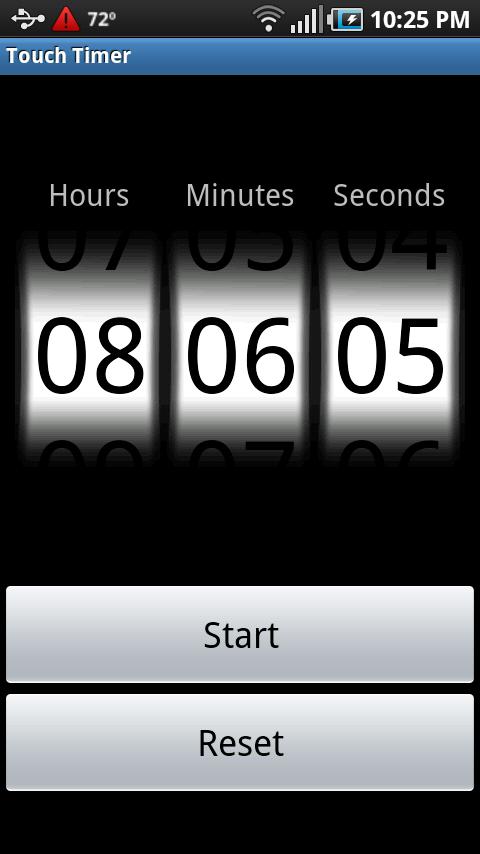
I wanted to move away from the chart and die format and make something that we could spin. For a minute I thought about asking my husband to help me make me a big and real wheel - like the one on Wheel of Fortune, but, as much fun as that would be, where would I keep it? Then, I was using a timer app and I thought that something like this could be modified to fit my needs.


But I don't have a clue about how to develop my own app....yet, but I want to learn.

I couldn't find an online tool that was exactly what I wanted, so I spent some time on PowerPoint creating Wheels of Fiction. Maybe I'm impressed due to the "IKEA Effect", but I made something that actually SPINS! (and I think my grade 2's will like the spinning action and sound effects).

I'll use this with my grade 2's, but if I was still teaching middle school I would have students create their own spinners (while I was creating this, I realized how much math (probability, circumference, degrees in a circle, etc.), ethics/character ed (what might look random is NOT), and language was involved.

In any grade, this will help students articulate a clear and simple plot summary, generate story ideas (for those who need some help), and set the scene for writing collaboratively or independently.

PS - Best viewed as a PowerPoint slide show. The SPIN animation doesn't work on an iPad when you use SlideShark . Spin works in Office365 PowerPoint Web App, although there is still no sound.

I've filled in all of the slides so that you can get the idea of how it works, but the beauty in this PPT is that you can customize it to suit your needs. I would love to hear how you might use the Wheels of Fiction :)

Friday, 26 July 2013

Preparing for Possibilities


My seven years as a teacher have all been in a middle school setting, but in September I’m headed to a 2/3 classroom in a K-5 school. I’m excited and a little nervous too.

When I got the job, I asked myself “What is the one thing that you can do to prepare for this new role that will be the most beneficial for you and for your students?”  “What is the most important skill for students in grades 2 and 3?”

Reading.

According to the Ontario Ministry of Education, “children who struggle with reading in Grades 1 to 3 are at a serious disadvantage” academically and emotionally. I didn’t really need the Ministry to tell me this; I’ve worked with students in grades 6, 7 & 8, some who continued to have reading difficulties. I know how important reading is and I wanted to make sure that I would be as effective as possible.  So for the first few weeks of July, I went to the classroom as a student, to take my Reading Part 1 Additional Qualification. Our instructor, PDSB Principal Jim Brooks, led us through engaging, practical and valuable learning activities that have put me on the path toward implementing a comprehensive literacy program in September and for years to come. I had the opportunity to work with a great group of teachers throughout the course and further develop my PLN.

It was a fantastic learning experience, but I still have moments of worry – Guided Reading, Shared Reading, Independent Reading, Word Study, not to mention Math, Social Studies, and Science. How will I fit it all in? For grade 2 and 3?

As I returned from our board’s professional library with another bunch of books yesterday, my husband, who is not a teacher, told me that I should take a break, and that I should just enjoy the summer. He asked me what I was doing with all of the books. I told him that I am

PREPARING FOR POSSIBILITIES


I don’t know my students. I don’t know who they are, or what they are interested in, or what they already know. Until I get to know them, all I can do is prepare for the possibilities. I’m not forgetting to have fun and enjoy my summer - part of what makes summer fun and enjoyable for me is learning and preparing. I'm connecting with others, asking questions, reading and thinking.
I'm excited about getting to know the group of children that I'll be working with, about meeting their parents and my new colleagues, and about all of the learning that I’ll be doing over the summer and into the new school year.

What possibilities do you think I should prepare for, knowing that I'll be teaching primary for the first time?